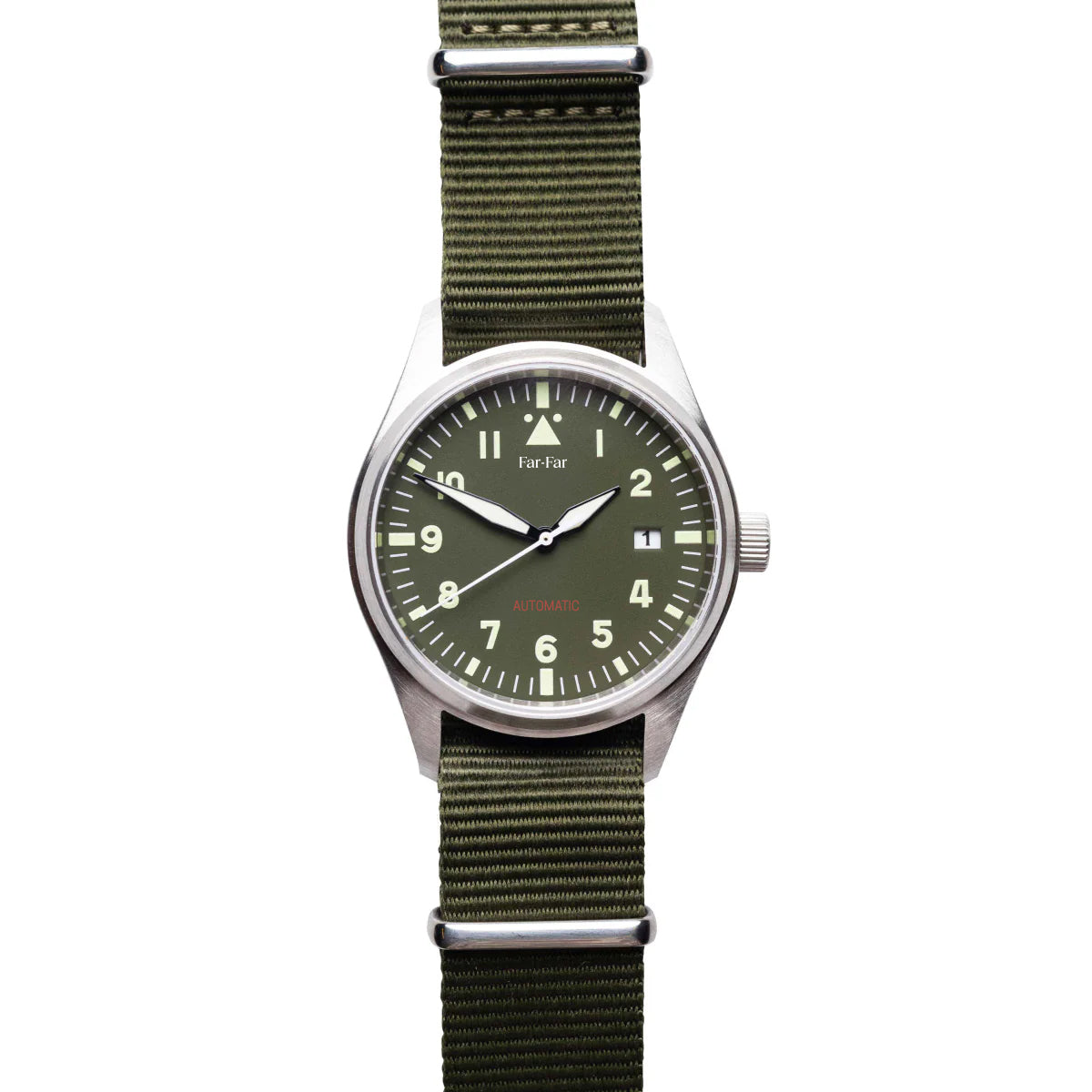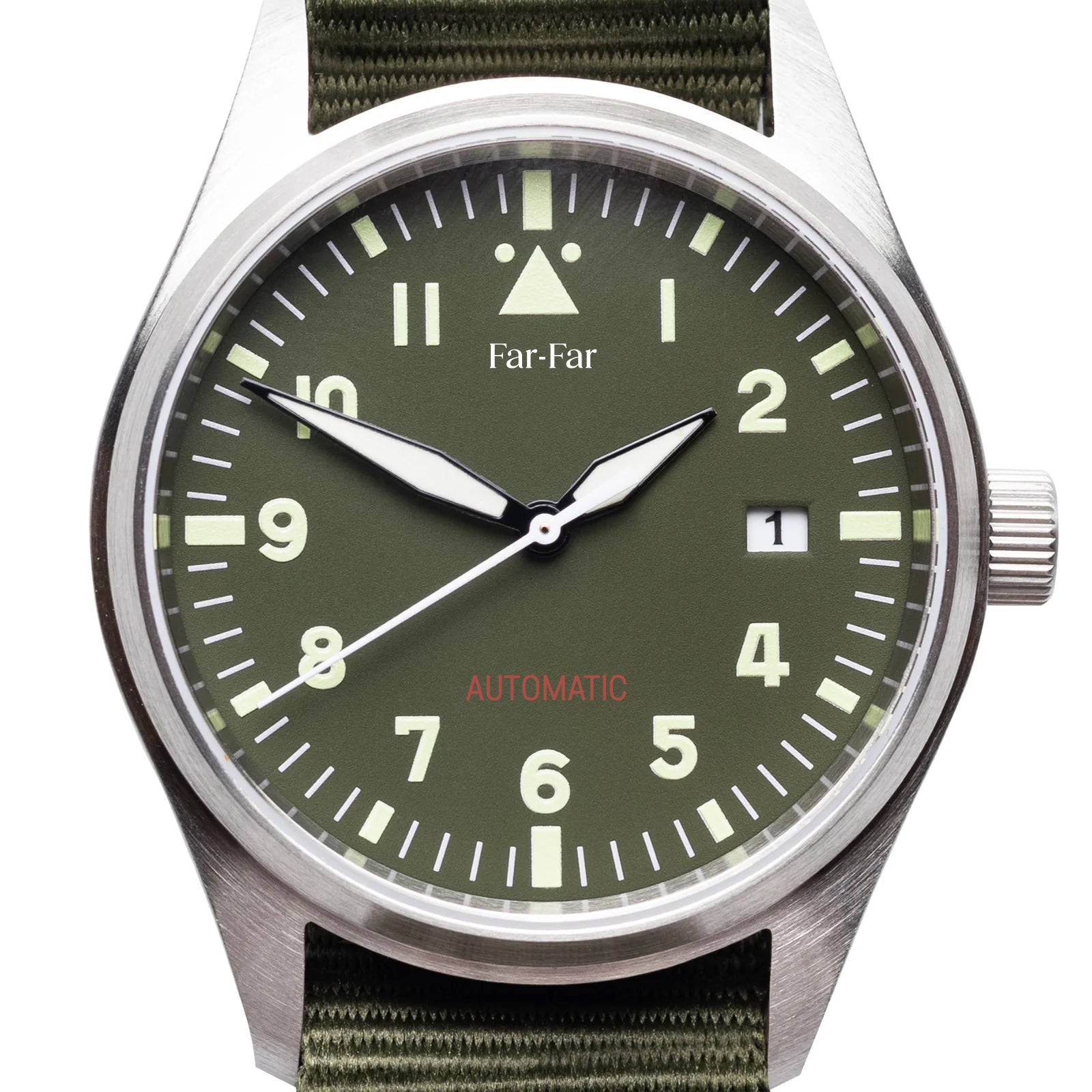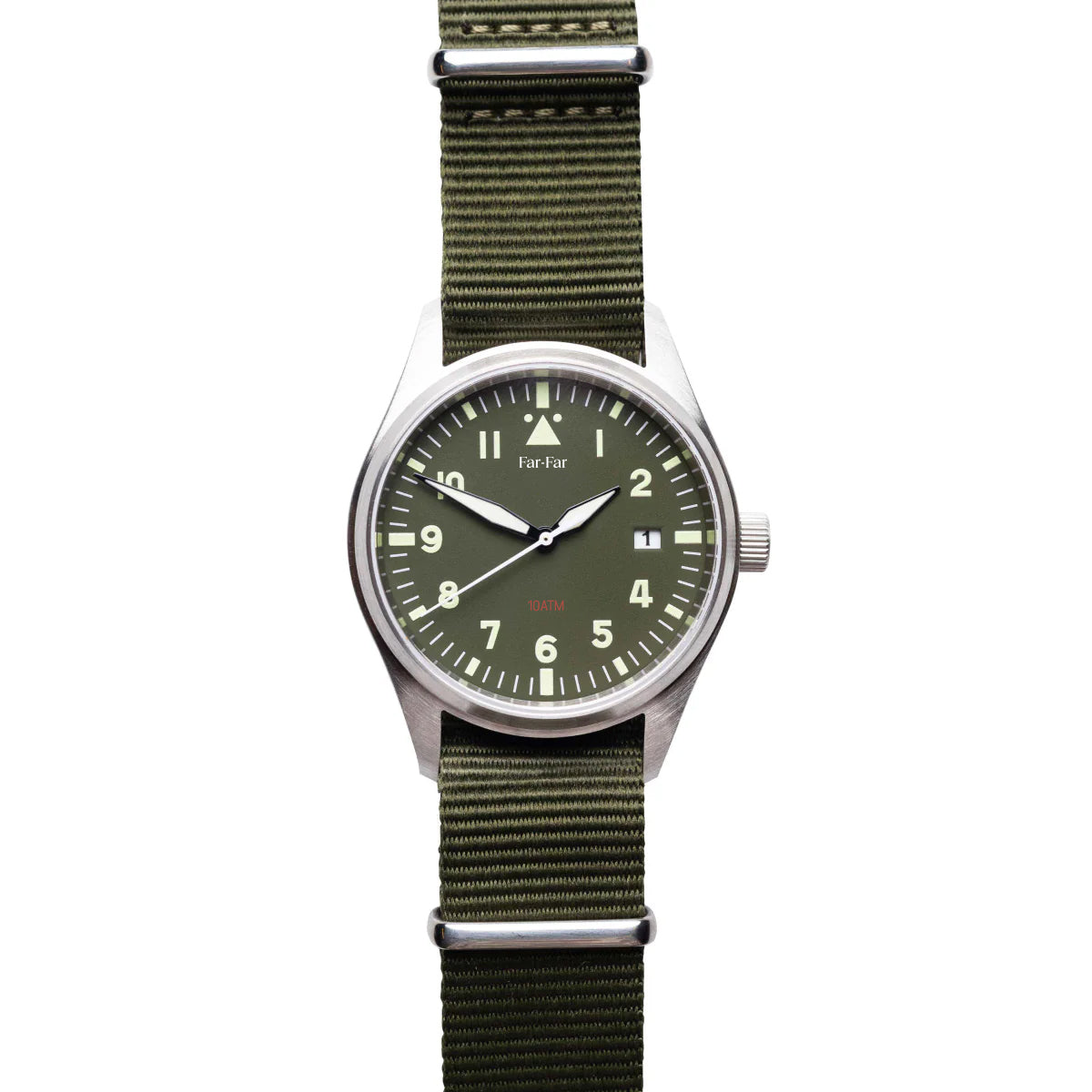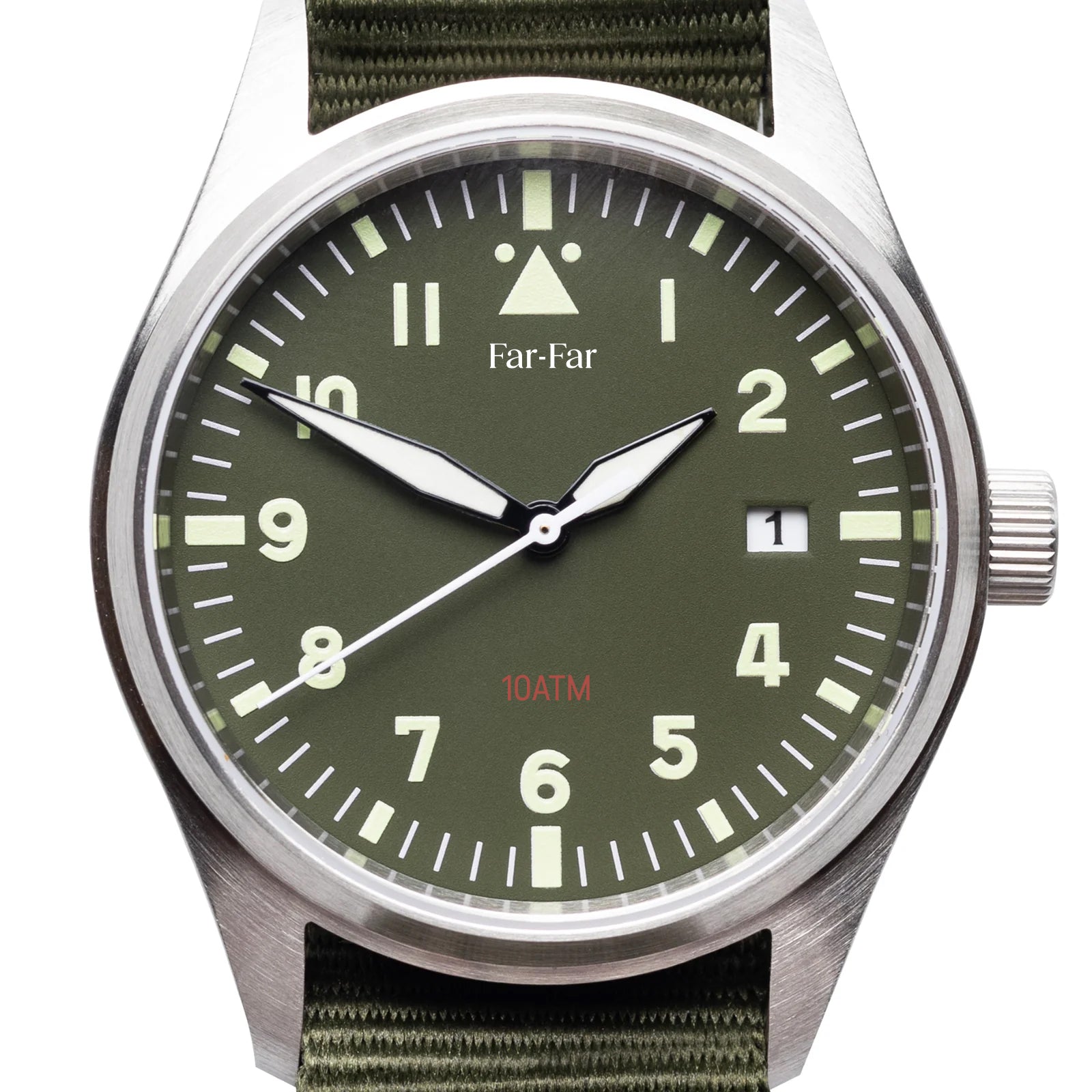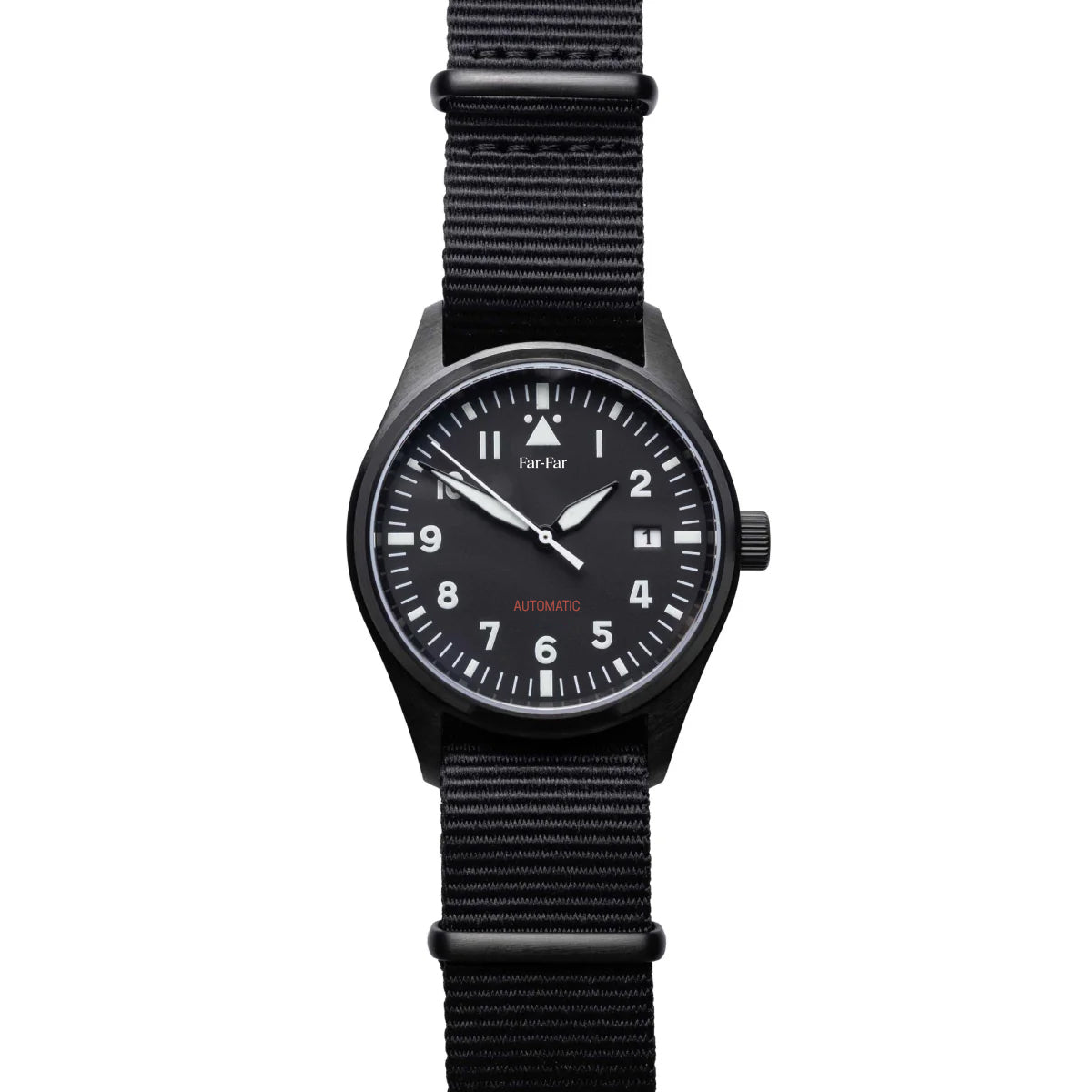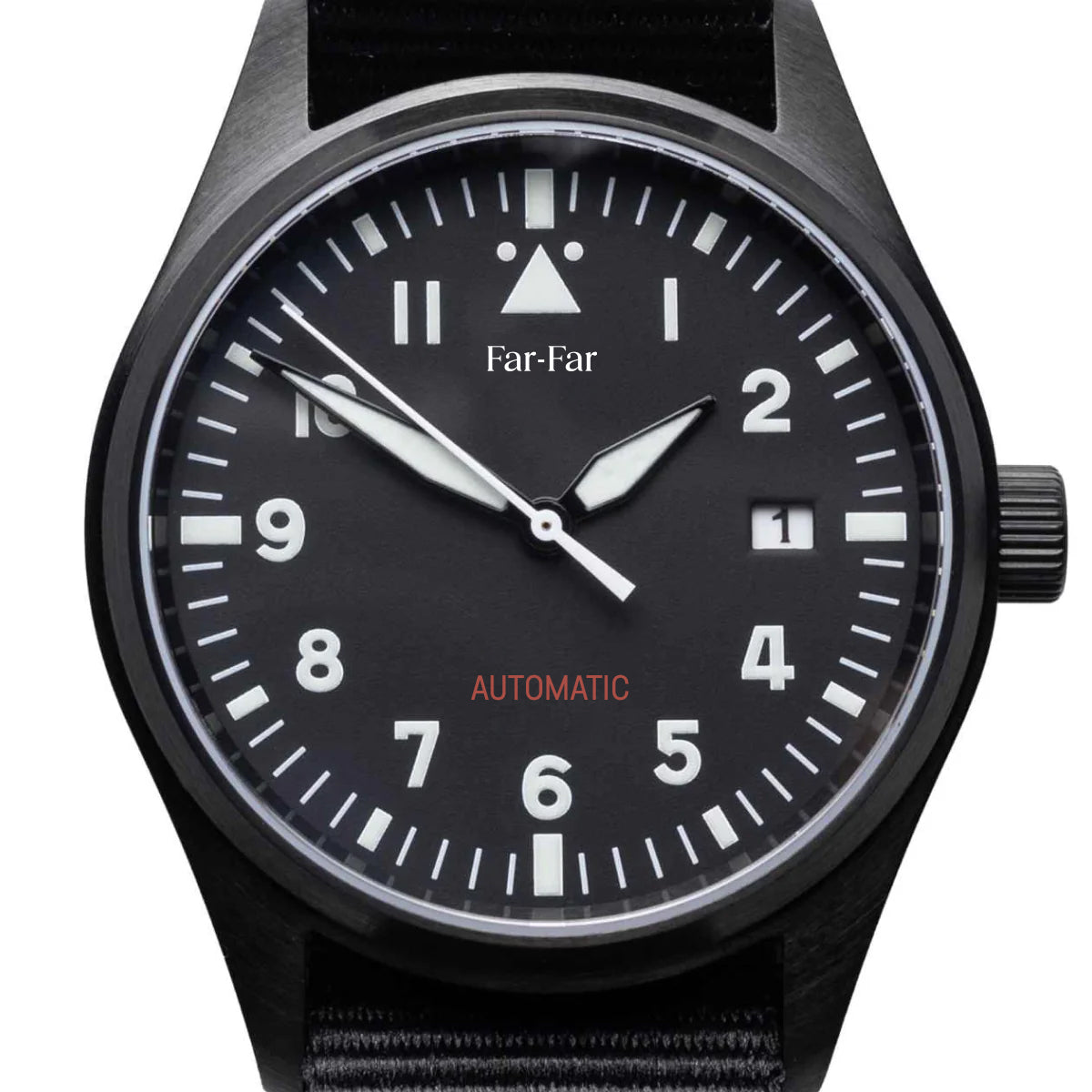

Which watch should I choose, Classic (quartz) or Automatic?
All our watches come in two variations: Classic (quartz) and Automatic. Here, we have summarized the advantages and disadvantages of both types, so you can make an informed and good choice for yourself. (If you have any questions, send an email to us at far@farfarklokker.no.)
What is an automatic watch?
An automatic watch, also known as a self-winding watch, is a mechanical watch that does not require manual winding or battery replacement to keep running. It gets the energy needed to power the watch from the movements of the wearer (you).
Automatic watches are equipped with a rotor – a small metal weight connected to the watch's moving parts. When you wear the watch, your wrist moves, and the rotor weight swings. This movement is converted into energy through a complex set of gears and springs inside the watch.
The automatic mechanism ensures that the watch keeps running as long as it is worn regularly. However, if the watch is not worn for a while, it will stop. In such cases, the watch can be restarted by giving it manual turns or by starting to wear it regularly.
Many watch enthusiasts appreciate automatic watches due to their craftsmanship and traditional design. They also provide a practical solution for those who want a mechanical watch without worrying about battery changes.
Our automatic watches are powered by NH35 movements from Seiko.
Advantages of an automatic watch
- Continuous operation: Automatic movements continue to function with regular use, without the need for manual winding.
- Tradition and craftsmanship: Automatic watches are recognized for their traditional craftsmanship.
- No battery replacement: Avoids the need for frequent battery replacement – both practical and environmentally friendly.
- Style and aesthetics: Often designed with a high degree of detail, contributing to a timeless and elegant aesthetic.
- Self-winding rotor: A built-in rotor uses wrist movements to generate energy and keep the watch running.
- Learning experience: There's a special satisfaction in wearing a timepiece with complex internal mechanics, especially when you understand how it works.
- They can last a lifetime - Automatic watches can last a lifetime when properly maintained.
Potential disadvantages of an automatic watch
- Dependency on use: Automatic watches require regular use to keep running. If they are not used, they can stop, which is quite inconvenient.
- Less precise than quartz watches: Automatic movements are less precise than quartz watches, especially over longer periods. They can vary by a few seconds per day, while quartz watches offer higher accuracy.
- Maintenance costs: Repairs and maintenance of automatic watches can be costly.
- Vulnerability to external influences: Automatic watches are more susceptible to external factors such as magnetism, shocks, and extreme temperatures compared to quartz watches.
- Limited power reserve: Some automatic watches have a limited power reserve when not being worn. This can result in them stopping if not used for extended periods. (Our automatic watch has a power reserve of 41 hours.)
What is a quartz watch?
Quartz movements use a quartz crystal (instead of a spring) to regulate the watch's timekeeping. These movements are known for accuracy and reliability and are powered by a long-lasting battery (2-3 years).
Our quartz watches are powered by the Miyota 2035 quartz movement. Miyota is part of the Citizen group and produces a variety of quartz movements, including the 2035.
Advantages of a quartz watch
- Accuracy: Quartz movements, including the Miyota 2035, are known for high precision. They provide accurate timekeeping with minimal deviation.
- Durability and reliability: The Miyota 2035 is designed to be reliable and requires minimal maintenance. Its quartz-powered technology provides good durability over time.
- Cost-effective: Quartz movements are often more cost-effective to produce than mechanical movements, which makes the watches somewhat more affordable.
- Low maintenance: Quartz movements generally require less maintenance compared to mechanical movements. Manual winding is not necessary, and battery replacement is the most common form of maintenance.
- Precision movement: The movements provide a smooth and precise motion for the hands, which helps maintain a consistent time signal.
- Used in various watch brands: The Miyota 2035 is often used as a reliable and precise quartz movement in various watch brands, giving customers access to reliable timekeeping at affordable prices.
Potential disadvantages of a quartz watch
- Mechanical feel: Some watch enthusiasts prefer the mechanical feel of handling a movement with gears and springs, which quartz movements do not provide.
- Battery replacement: Although battery replacement is relatively infrequent compared to manual winding of mechanical watches, a quartz movement will still require battery replacement approximately every 2 years, depending on use. (It usually costs around 200 NOK to replace a battery at a watchmaker.)
- Less complex: For those who appreciate the intricate complexity of mechanical movements, quartz movements may be perceived as less exciting or handcrafted.
- Electronic nature: Quartz movements have a more electronic nature than mechanical movements. Some prefer the traditional handcrafted feel of a mechanical watch.
Regardless of your choice, we hope and believe that you will be satisfied with your new Far-Far timepiece!
Do you have any questions? Send an email to us at far@farfarklokker.no.
On sale this week